SCAGLIOLA JILLIAN SZACHURY

Figure 1 : Here is an image of how scagliola is dyed.
Hand grime, or yellowing caused by a subsequent coating, frequently ruin the elegance and beauty that scagliola presents. The maintenance requirements for scagliola are quite elaborate, but easy to follow. Removing grime and restoring the original finish is a simple if labor-intensive process. Scagliola historically has a finish coat of linseed oil, blond flake shellac, paraffin oil, styrene, or polyurethane. Modern coatings are not advisable, as they are difficult to repair later, and those repairs result in the removal of more historic material when they fail. When removing an inappropriate coating or deteriorated finish, use careful, mechanical methods in lieu of solvents, which can harm the scagliola. Once the coating is removed, a new stopping coat will restore the original luster.
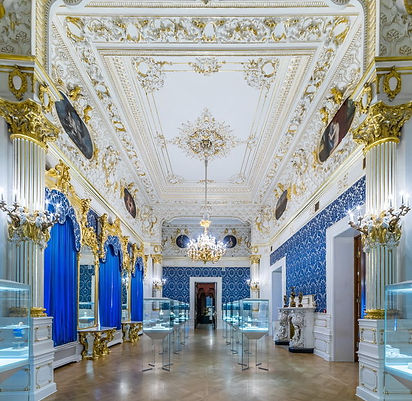
The five images displaying scagliola all present different ways that this material can be utilized in a given space.We see this material often be used for walls, ceilings, and even columns too. Although scagliola is oftentimes only used in Renaissance styled interiors, we can see through these images that there are different ways to utilize this material to ensure that every space remains unique and original. The designs created within the material are different as we observe every image on this page. Every little detail in scagliola can make such a huge impact on the design as a whole, which is what makes this material so interesting. Look at figure 4, for example, where you can view this material up close. Although a majority of this slab of scagliola may be yellow hue, the pops of blue and red make this extravagant pattern and design that makes it so much more aesthetically pleasing for an individual to look at.

Scagliola was used by Italian craftsmen in The Renaissance Era. It's first use spread all across Europe, and eventually to other places around the world as well. Traditionally, scagliola was made from a calcium sulfate composition, and is finely ground and mixed with water that creates this earthy, elegant material. In the United States, scagliola was also made from calcium sulfate. However, Keenes Cement was most commonly used for making scagliola, because this material had slow-setting properties. Different formulas for scagliola are appropriate - one type may be better than another for different purposes.
The process to make this material is very long and tedious: it begins with the develop of the design on the work surface. Once the pattern is drawn, the artist then moves forward with cutting this design into the material a few millimeters deep. Then they go on filling these caved parts with the paddy made of colored scagliola. Once the mixture is dried, the artist then smooths the surface with the water lapping machine to remove the excess parts of scagliola. The sealing and smoothing process is next, where it may be repeated more than once depending on the type of decorations carved in the material, and the cycle of incision.

Using gypsum products has several advantages for the environment, and can earn green points for a project in several categories:
-
Recycled content - Building materials must contain either pre-consumer or post-consumer recycled components in order to qualify for recycled content green building credits.
-
Locally available material/transportation - With the increased use of gypsum in architecture and design, manufacturing stations are increasingly beginning to be located closer to market areas, where they can easily transport their finished goods by rail.
-
Life cycle assessment and building life service - Gypsum products' in-place construction costs are very low and their anticipated life-span is quite long, which is why we see this material being utilized so often.
-
Construction waste diversion and on-site debris disposal - Gypsum construction waste can be recycled and used to manufacture other gypsum products.
The one downside of this material is that over the past few decades, gypsum is known to have poor indoor air quality. Some side effects that may occur when breathing in gypsum are headaches, fatigue, concentration problems, allergies, asthma and other issues. As the awareness of indoor air quality has grown, however, the demand for healthy living spaces is more crucial than ever before. That being said, organizations are striving to improve the indoor air quality of this material day by day.

ATSM standards for gypsum include guidelines such as:
-
Water-resistant gypsum backing board can be used as a base for the application of ceramic or plastic tile on walls or ceilings
-
Gypsum board shall consist of a noncombustible core, essentially gypsum, surfaced with paper bonded to the core.
-
There are required physical properties this material must obtain: core, end, and edge hardness; straightness of the edges and ends; length; tapered edge depth; flexural strength; humidified deflection; nail pull resistance; permeance; water resistance; and surface water absorption.
The list of organizations below are a few examples of foundations that test gypsum before use:
-
The Gypsum Association
-
National Gypsum
-
United States Gypsum Corporation (USG Corp.)